From Queue to Choice: A Small Rule for Picking Tonight’s Film
A simple rule for picking tonight’s film turns a crowded watchlist into a mood-led choice, helping a busy evening reach the opening scene sooner.
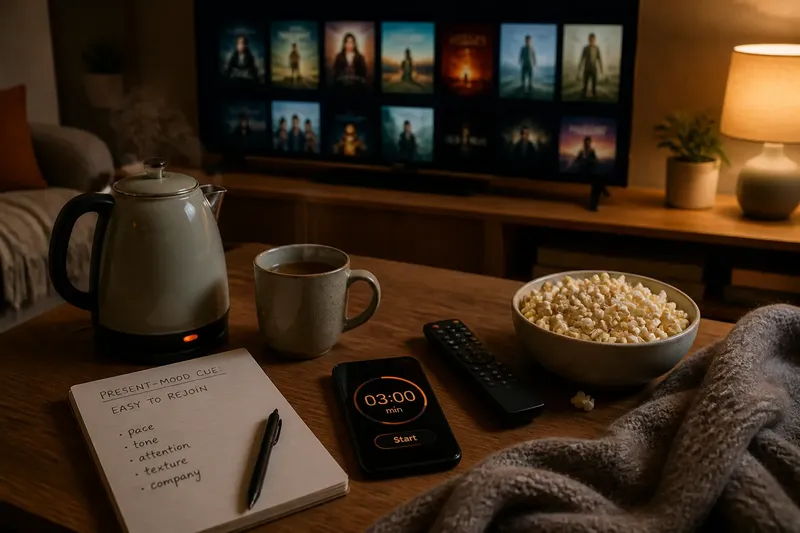
The kettle clicks off while a watchlist keeps offering more possibilities. Picking tonight’s film can take longer than settling onto the sofa if every title gets a fresh hearing. A small rule helps: choose one present-mood cue, give the queue a short, fixed browsing window, then commit to a film that fits.
The queue has a job
A watchlist is useful storage and poor company for an indecisive evening. It holds films saved for different reasons: a friend mentioned one, a trailer looked good, or its poster seemed suitable for a rainy afternoon. Those reasons do not all apply tonight.
Browsing without a limit invites the queue to become a second entertainment. Each title prompts another question, then a search for its runtime, cast, reviews, or a better alternative. The evening’s energy goes into comparing films rather than watching one.
The aim is not to find the single best film in the queue. It is to find a workable match for the mood and attention available now. That distinction removes an impossible standard from an ordinary decision.
Choose one mood cue
Before opening the list, name one thing you want from the viewing experience. Keep it concrete and present-tense: “I want something quiet,” “I want brisk movement,” or “I want a story I can follow while folding laundry.” One cue is a filter, not a full review of your emotional condition.
A cue can describe pace, tone, texture, or attention. It need not describe genre. “A warm film” may point toward a comedy, a family story, or a gentle drama; “a film with a clear plot” is more useful than trying to predict which genre will feel right.
- Pace: Do you want a film that settles in slowly or gets moving early?
- Tone: Would dry humor, tenderness, suspense, or something lighter suit the room?
- Attention: Can you give the screen your focus, or should the story be easy to rejoin?
- Texture: Are you in the mood for vivid color, spare settings, or busy visual detail?
- Company: Does the film need to work for everyone watching, rather than only the person holding the remote?
Choose just one. A list of five requirements quietly recreates unrestricted browsing in a more respectable outfit. If the first cue does not narrow the queue, use a second only after the search window has begun.
Give browsing an edge
Set a modest limit before you start scrolling. A few minutes is often enough to scan saved titles and read a short description; the exact limit should fit the evening, not an imaginary rulebook. Use a phone timer, a kitchen timer, or the timer built into the television. When it sounds, stop collecting options.
Then make a small shortlist of films that plausibly match the cue. Two or three candidates are plenty. Read the platform’s synopsis, check the opening description or trailer only if it answers a real question, and skip the review spiral. A thumbnail is not a binding contract.
When one title fits, press play. If two fit about equally, choose the one already saved or the one whose description gives you a clearer sense of its opening situation. These are tie-breakers, not signs that the film has earned a formal hearing.
When does the rule help?
What counts as a present-mood cue?
It is one short description of the experience you want tonight, such as “quiet and observant” or “fast enough to keep me awake.” It should help distinguish between options without trying to predict every reaction you may have.
How long should browsing take?
Pick a brief window that feels easy to honor, often just a few minutes. The timer is there to close the search, not to create pressure or turn the evening into a productivity exercise.
What if none of the saved films fits?
Search once for the cue using a specific category or a familiar platform filter, then choose from the results that look plausible. If the queue still offers nothing, select a known fallback rather than opening an endless chain of recommendations.
Should I keep watching if the choice feels wrong?
You can stop if the film plainly does not suit the evening, but give it enough attention to notice what is not working. Then name a different cue and make one replacement choice; restarting the entire search is rarely useful.
A small worked choice
Say you have finished dinner, the living room is still noisy, and your saved list contains a tense mystery, a long fantasy, and a quiet comedy. You name “easy to rejoin” as the cue, set a short timer, and scan only those saved titles. The comedy’s description suggests a clear setup, so you choose it and expect to be able to follow the story even if someone asks where the serving spoon went.
The example is deliberately ordinary. The rule does not claim the comedy will be brilliant, or even that the room will stay quiet. It makes a choice possible using information already at hand, which is a useful enough service from a queue.
What the rule cannot do
A mood cue is a starting point, not a promise about how a film will feel. Descriptions can be vague, trailers can emphasize the wrong quality, and a film saved months ago may no longer appeal. The rule helps you choose; it cannot remove uncertainty from watching.
It also need not be used every evening. If a title comes to mind immediately, pick it. If you are watching with someone else, let each person name one cue and look for an overlap. Negotiating every preference in detail can take longer than the film’s opening scene.
One thing is not worth the effort: opening several services at once to compare their recommendation rows. That adds more shelves, not more clarity. Start with the queue you already have and broaden the search only if it contains no plausible match.
Let the choice begin
Once the film starts, put the queue away rather than leaving it visible beside the picture. Give the opening a fair chance to establish its pace and tone. If it suits the cue, settle in; if it does not, make a deliberate replacement instead of browsing under the film’s dialogue.
For picking tonight’s film, the useful habit is modest: name one present-mood cue, browse briefly, and let a plausible choice be enough. The watchlist can keep its other possibilities for another night. Tonight, it only needs to get you to the opening scene.