The After-Credits Question: Turn One Moment into a Walking Prompt
An after-credits question can turn a familiar walk into a low-pressure creative prompt, with a simple way to carry one film moment without solving it.
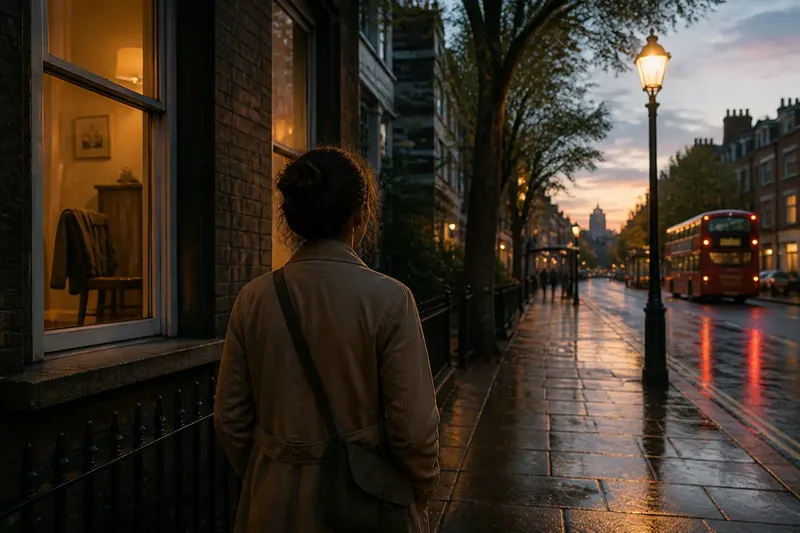
You leave the theater, reach the corner, and realize one line from the film is still following you. An after-credits question can give that stray thought a place on an ordinary walk, without requiring a notebook, a clever answer, or a dramatic change of route.
The useful move is to carry the question, not the whole film. Choose a question tied to one moment, let the walk add details around it, and stop when you get home. Which version suits you depends on how much attention and time you have to spare.
Choose the right question
A good walking prompt is open enough to wander, but attached to something specific you saw or heard. It might concern a character’s choice, an object that appeared twice, or a pause before someone answered. “Why did the character do that?” can work, but a question with a visible anchor is easier to carry.
Try these shapes:
- A choice: What did the character think they would lose by telling the truth?
- An object: What would the key mean if it belonged to someone else?
- A silence: What might have been said during that long pause?
- A place: What would this scene feel like from the doorway rather than the center of the room?
Pick one question, not a bundle. If it needs several plot explanations to make sense, it is probably too large for a walk. The point is to notice fresh possibilities, not to reopen the film’s case file.
Match the walk
If you have only a short loop between errands, choose a question that invites sensory attention. Ask what the scene’s room might smell like, or what sound would have changed the character’s mood. You can use the street you are already on: a bus braking, a bakery door, or a wet pavement may give the question a new texture.
If you have a longer, familiar route, choose a question with several plausible answers. For instance, ask what a character might have done if the other person had arrived early. Let different possibilities appear without voting among them. A familiar route helps because you do not have to spend much attention working out where to turn.
If your walk is crowded or full of crossings, keep the prompt simple and let road awareness take priority. A single word or image can be enough to hold the film in mind between intersections. There is no creative prize for contemplating a complicated motive while stepping into a bike lane.
If you are walking with someone, choose a question that does not demand agreement. “What would you have noticed first in that room?” invites different answers; “What was the correct meaning of the ending?” sounds like an exam with snacks postponed. You can each offer one observation and leave the question open.
Keep it unanswered
The temptation is to solve the question, especially if the film left an obvious gap. Resist turning the walk into a hunt for the director’s intended explanation. Treat each thought as a possibility: a character may have hesitated from fear, courtesy, exhaustion, or some private reason the film never supplies.
Say you keep thinking about a coat left on a chair in a scene where two characters part without speaking. On your walk, ask what the coat would suggest if the room belonged to a stranger. You might notice its damp sleeve in your mind, then wonder who came in from the rain. That is enough; the prompt has produced a new detail without pretending to settle the scene.
If the question starts repeating itself, shift from explanation to observation. Ask what changes when you imagine the scene from a different distance, or what detail you had not noticed while watching. If it still feels stuck, drop it. Carrying a prompt is an invitation, not an unpaid assignment.
What fits your walk?
What if I have only ten minutes?
Use one question with a concrete anchor, such as a sound, gesture, or object. Let it recur when it naturally comes to mind; a short walk does not need a beginning, middle, and neatly wrapped ending.
Should I write the question down?
Write it down if you are likely to forget it before reaching the door, or if a phrase from the film is doing useful work. Otherwise, keep a short version in mind and leave your phone in your pocket.
What if the film felt confusing?
Choose a question about a moment you understood, even if the larger plot remains hazy. “What did the character notice outside the window?” is often more inviting than trying to reconstruct every turn of the story.
Can I use a walk I take every day?
Yes. The route can stay ordinary while the question changes, and repeated landmarks may give you a steady backdrop for noticing different details. There is no need to make the walk more scenic; the lamppost has not applied for a speaking role.
Leave a small trace
When you get back, decide whether anything from the walk is worth keeping. A note in your phone can be as small as “coat, rain, stranger,” or you can let the thought go. Keeping every prompt would turn a light habit into filing.
What is not worth the effort: researching interpretations during the walk, replaying the whole plot in order, or forcing a surprising insight before you get home. Those tasks compete with the simple pleasure of noticing what the question brings up.
For an after-credits question walking prompt, choose one moment, make one open question from it, and match its scale to the route and company you have. The walk does not owe the film an answer. It only needs to leave you with one detail you might otherwise have missed.